
a brief introduction to writing to royals
The hobby of writing to royals (and, hopefully, receiving a reply!) may be an art, but it need not be complicated. In fact, you should keep it as uncomplicated as possible. In virtually all cases, your letter or card should be short, respectful, and not personal. In this brief but helpful guide, the Postmaster will give you the tips you need to 1) compose your letter or card and 2) compose the envelope – with the aim of increasing your likelihood of receiving a reply.
Remember, most letters to royal houses will not receive a reply. When a reply is received, it is almost always in the form of a pre-composed response like a card or from a secretary or assistant. This is particularly true for birthday greetings or other occasions during which mail volume at the palace is high. Letters and cards addressing more specific events or engagements are less likely to receive a reply, but when they do earn a reply it is usually a far more personalized one.
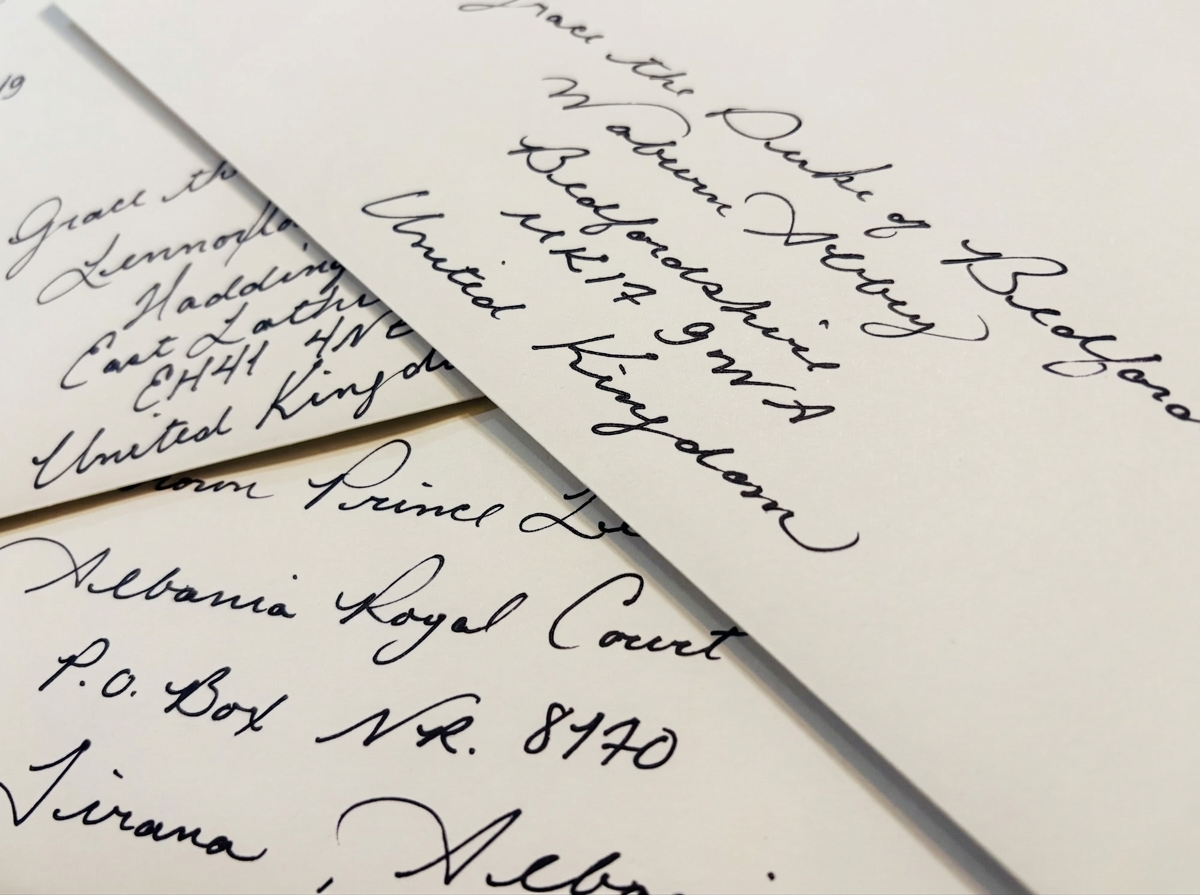
the postmaster’s rules for composing a letter to a royal or noble
- Never use the word “I” or “me”. Of course, “never” is a strong term but here it is recommended you follow this rule as closely as possible. For example, instead of saying “I enjoyed listening to your recent remarks…” the Postmaster recommends something like “It was a great pleasure listening to your recent remarks…”.
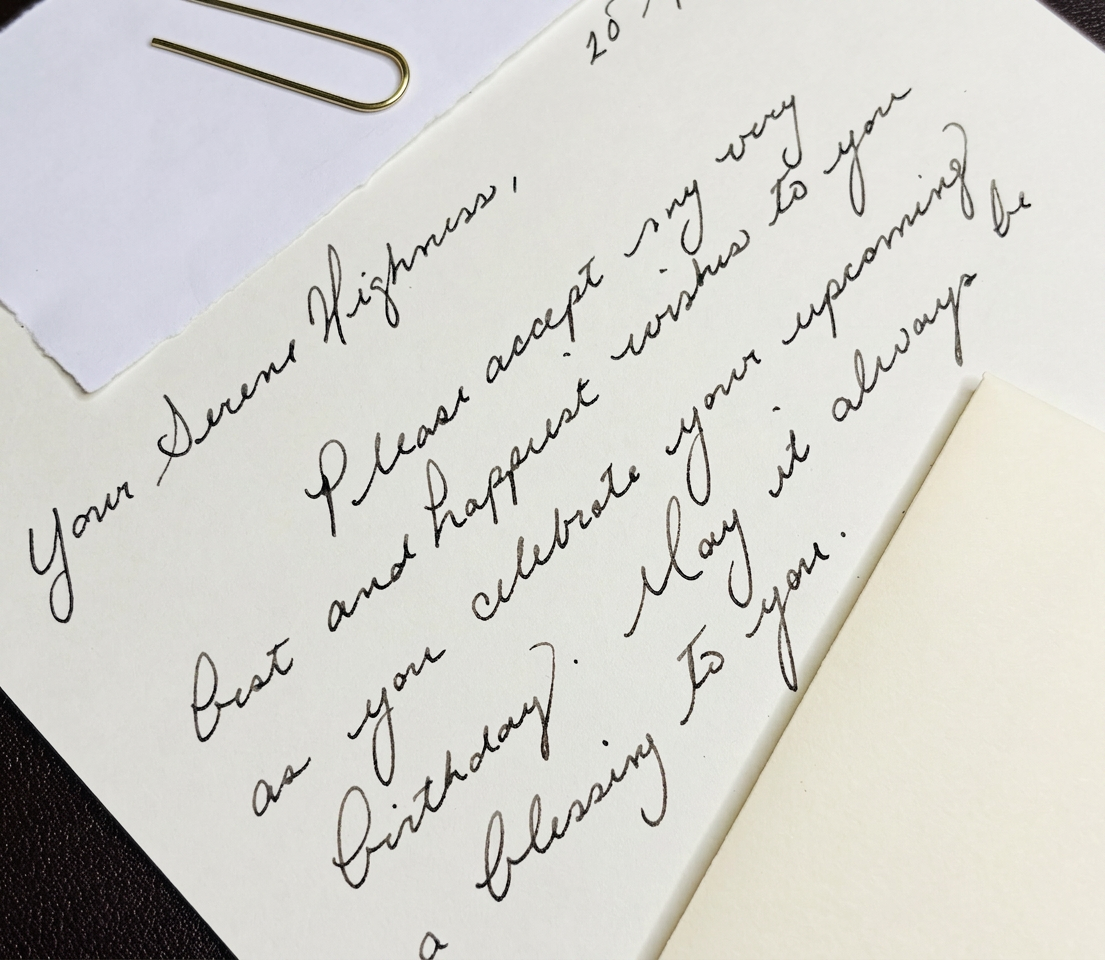
- Avoid stock phrases like “happy birthday” or “happy anniversary”. Instead, try something like “Please allow me to extend my congratulations to you on the occasion of your wedding anniversary.” These more formal forms of writing will help your letter or card stand out to royal correspondence offices.
- Keep it short. In general, there is no need for your message to contain more than 2 or 3 short sentences. For example, “Your Royal Highness, please accept my best wishes for you on the occasion of your birthday – that it would be a joyful day for you and your family. Sincerely, John Doe.” That’s it. The Postmaster rarely says more.
- Always write your message by hand. If your handwriting is not so sharp, it is still recommended that you take your time and print as legibly as possible.
On very rare occasions where more personal details may be warranted or provide a nice touch, it is recommended that you keep that reference to only one sentence or phrase. For example, “As a person living with a terminal illness, it was very moving to read your recent message regarding…”. Personal information like this can make the reply you receive a far more personalized one. Sharing too much or controversial personal information will likely get your letter marked as too risky to reply to.
Composing Your Envelope
To increase the chances of receiving a reply, make sure your return address is clearly legible!
Always use the appropriate style and title of your respondent. For example, do your due diligence in determining if the royal in question is a “Majesty”, a “Royal Highness”, “Serene Highness”, or something else. The address guide on this website usually provides this information for you.
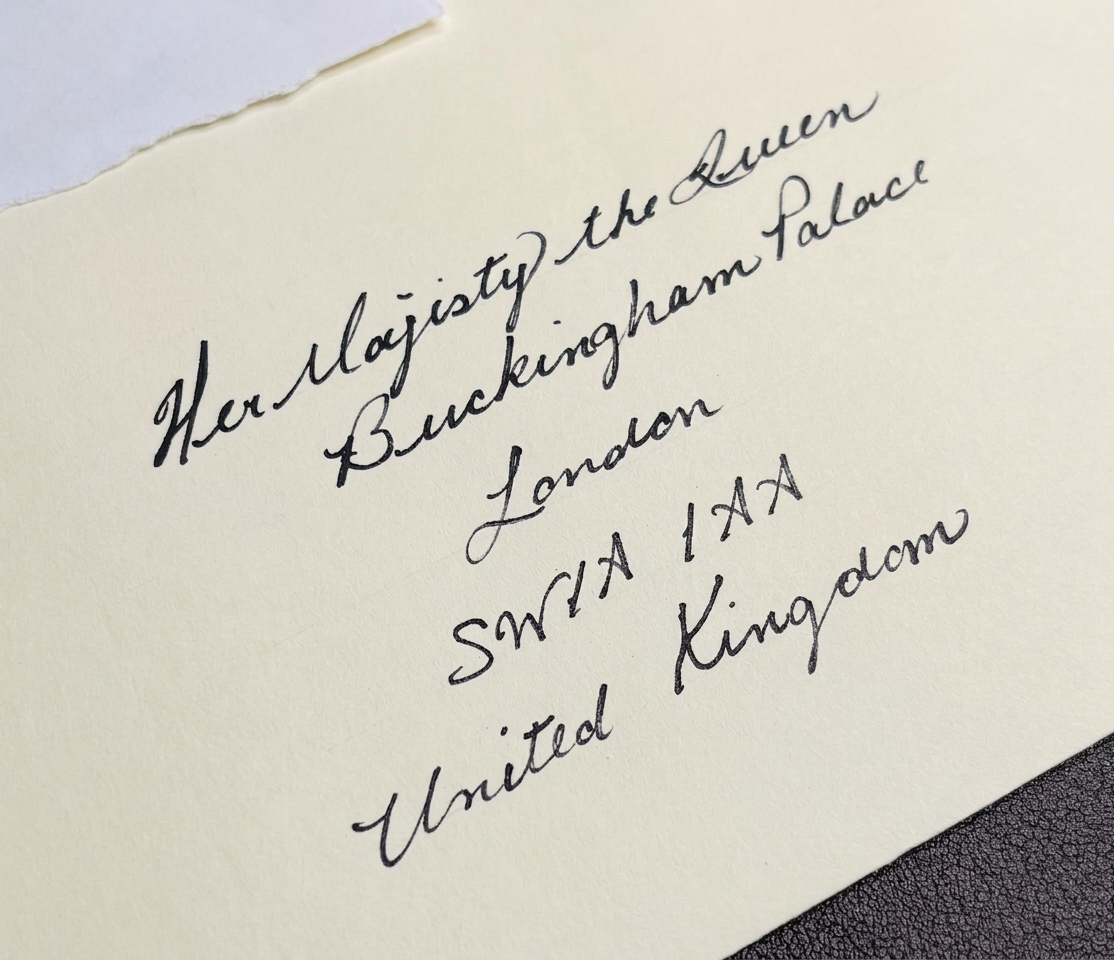
When writing the address of the royal or noble, it is rarely necessary to include the name of the royal. For example, it is unnecessary to address an envelope to “His Majesty King Charles III”. Instead the address should simply read:
His Majesty The King
Buckingham Palace
London
SW1A 1AA
United Kingdom
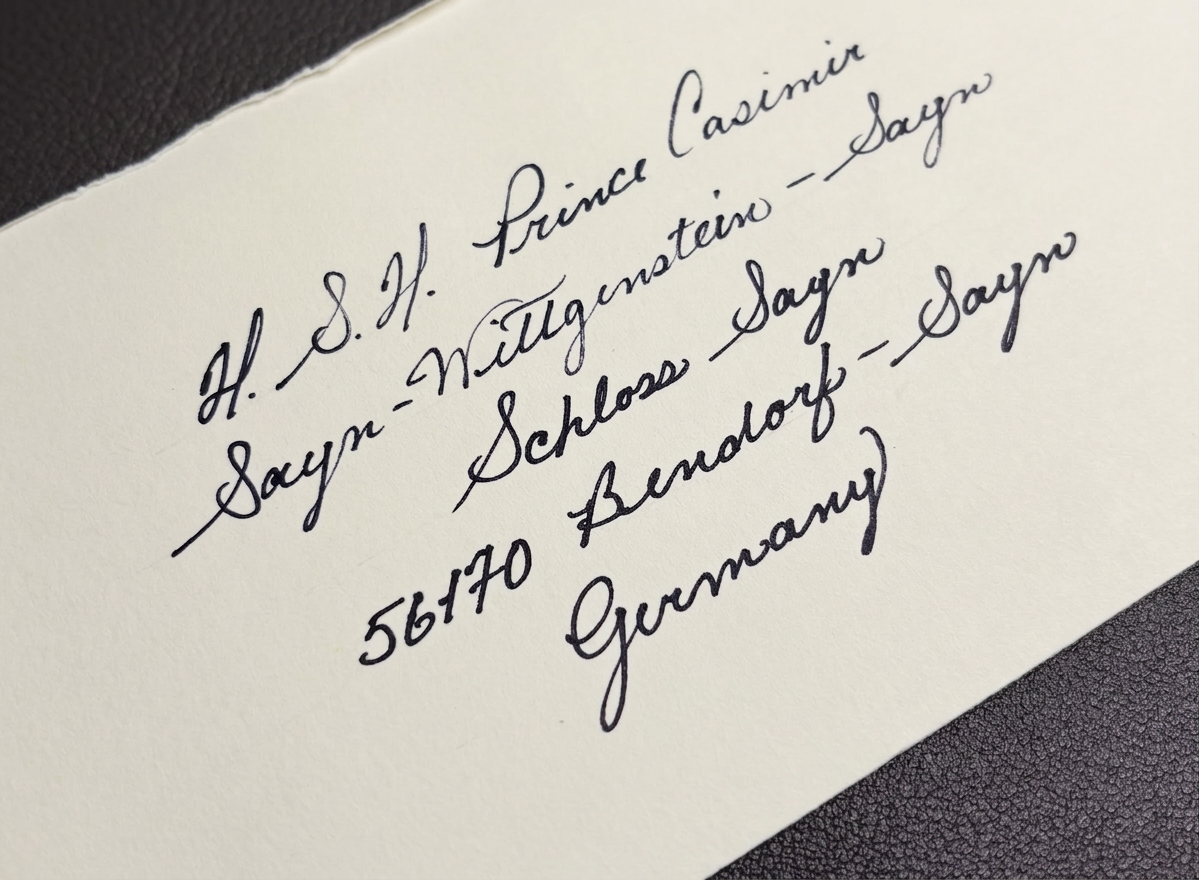
For some smaller royal houses, particularly the former German royal houses, there may be many princes or dukes in the family. Therefore, you can be more specific to avoid confusion. However, when writing to the Head of House, it is still preferred to address the envelope to, for example, “His Serene Highness the Prince of Lippe”.
When writing to the heir of one of these houses, you should address it to, for example, “His Serene Highness The Hereditary Prince of Lippe”. For younger children or siblings of the Head of House, who also hold princely or ducal titles, it would be necessary to include their name to avoid confusion.
conclusion
With these simple guidelines you, too, may be receiving some very interesting replies from royals and nobles around the world. Remember, this hobby should be a fun and interesting way to engage with some of the world’s most fascinating people and families. The Postmaster wishes you the best of luck on your royal correspondence adventure!
the nobility of the united kingdom
A short note regarding the style and titles of the English nobility:
When addressing an envelope to a Duke, use the formal “His/Her Grace”, for example, His Grace the Duke of Marlborough.
For an Earl, Viscount, or Baron, use “The Right Honorable”, for example “The Rt. Hon. The Earl of Sandwich”.

